
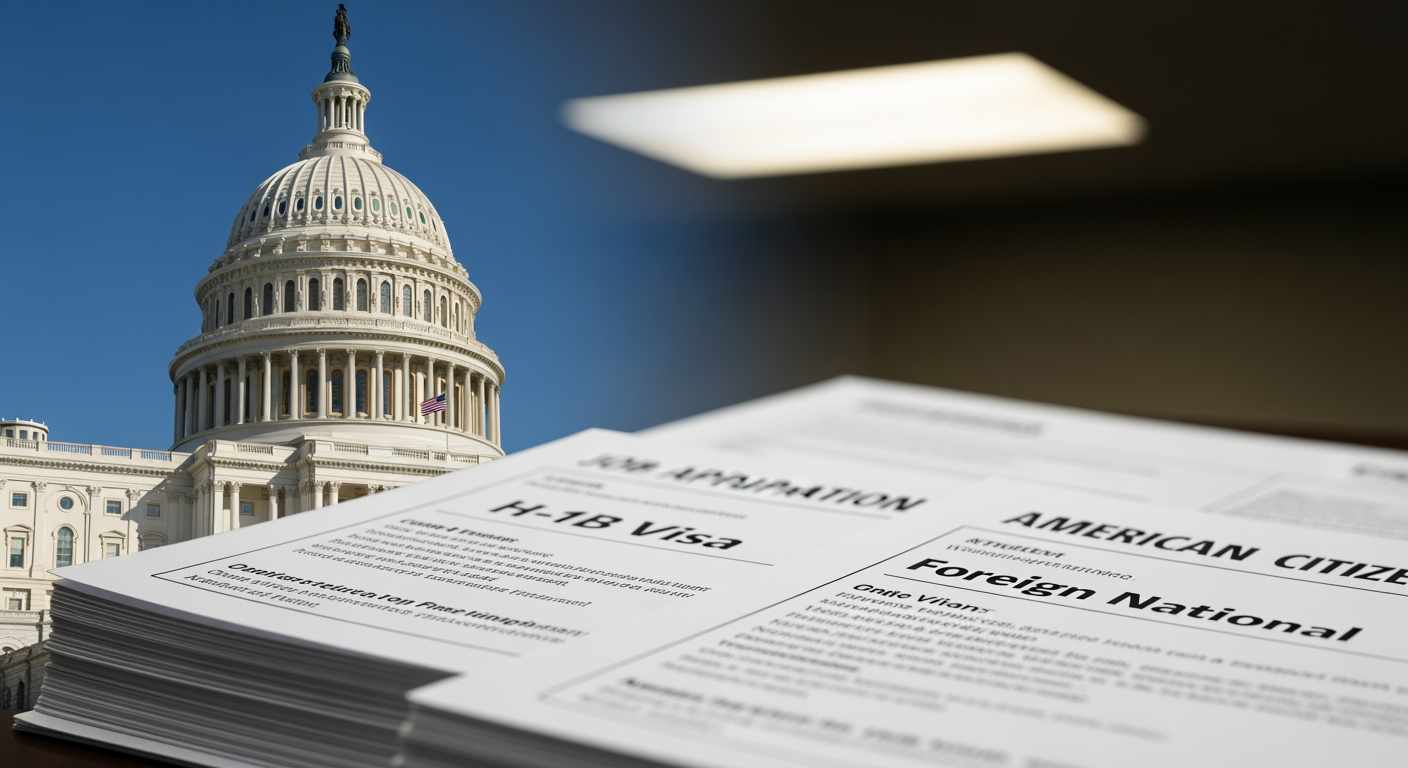
U.S. government agencies are reportedly advertising and filling critical positions with H-1B visa holders, potentially bypassing qualified American workers. This has ignited a fervent national debate, amplified by a viral social media post earlier this year, questioning the integrity of federal hiring practices and the core purpose of the H-1B visa program. The situation challenges long-held principles of prioritizing domestic talent, prompting an urgent reevaluation of immigration policy’s impact on the U.S. workforce.
Reports gaining traction online since early 2025 highlight numerous instances where federal departments have allegedly sought non-citizen workers for roles traditionally held by Americans. These positions span crucial sectors, including advanced IT infrastructure, cybersecurity, data analytics, and specialized engineering within agencies such as the Department of Defense and the National Aeronautics and Space Administration (NASA). Observers point to job postings that either explicitly mention H-1B sponsorship or outline requirements making it difficult for many American applicants to compete. This has sparked accusations of systemic oversight failures, leading to questions about the true scope of these hiring practices.
The H-1B visa program was designed to allow U.S. employers to temporarily employ foreign workers in specialty occupations, typically requiring a bachelor’s degree or higher in a specific field. Its original intent was to fill critical skill gaps where American talent was genuinely unavailable, fostering innovation and economic growth. Critics now argue the program has been increasingly misused, particularly by government contractors and, allegedly, by direct federal entities. This alleged misuse includes securing cheaper labor or circumventing more stringent hiring processes for domestic workers. The U.S. Citizenship and Immigration Services (USCIS) outlines strict guidelines for the H-1B program, emphasizing its temporary and specialized nature. These guidelines are available at USCIS.gov.
The alleged preference for H-1B visa holders in government roles carries significant implications for the American workforce. Labor economists warn of potential wage suppression in high-demand tech and engineering fields, as competition from foreign workers can drive down salary expectations. This practice could also diminish opportunities for recent American graduates and mid-career professionals seeking federal employment, which is a traditional pathway for stable and impactful careers.
“When government jobs, which are often seen as the bedrock of national employment, appear to favor H-1B candidates, it sends a deeply concerning message to our domestic workforce,”
— Dr. Evelyn Reed, Senior Policy Analyst at the Center for American Workforce
Dr. Evelyn Reed, Senior Policy Analyst at the Center for American Workforce, emphasized the potential negative impact on American citizens investing in education for these specific roles. The Bureau of Labor Statistics offers extensive data on U.S. employment trends, providing context for these concerns, at BLS.gov.
The controversy has quickly escalated to Capitol Hill, prompting bipartisan calls for investigations and legislative reforms. Several members of Congress are demanding audits of federal agencies’ hiring practices, specifically scrutinizing the use of H-1B visas for government contracts and direct employment. Representative James Peterson (R-TX) has announced plans for a new bill aimed at strengthening protections for American workers in federal roles.
“Our government’s primary duty is to its citizens, and that includes ensuring fair employment opportunities,”
— Representative Elena Rodriguez (D-CA), Member of the House Committee on Oversight
Representative Elena Rodriguez (D-CA), a Member of the House Committee on Oversight, underscored the need for immediate transparency and accountability. Public outcry, initially fueled by social media, now manifests in organized advocacy, urging lawmakers to prioritize domestic talent.
The debate surrounding H-1B visa use in government employment highlights a fundamental tension: the desire for specialized skills to maintain global competitiveness versus the imperative to protect and cultivate the domestic workforce. Policymakers face the delicate task of crafting solutions that foster innovation without inadvertently marginalizing American job seekers. Many experts advocate for robust training programs for American workers, ensuring they possess the cutting-edge skills required for future government roles. A report from the Tech Policy Institute, “Navigating the Future: Skills Gap in the US Tech Workforce,” explores these challenges in depth at TechPolicyInstitute.org. The outcome of this national discussion will likely redefine the parameters of federal hiring and H-1B visa utilization for years to come, profoundly impacting the economic landscape for all Americans.