
Quick Read
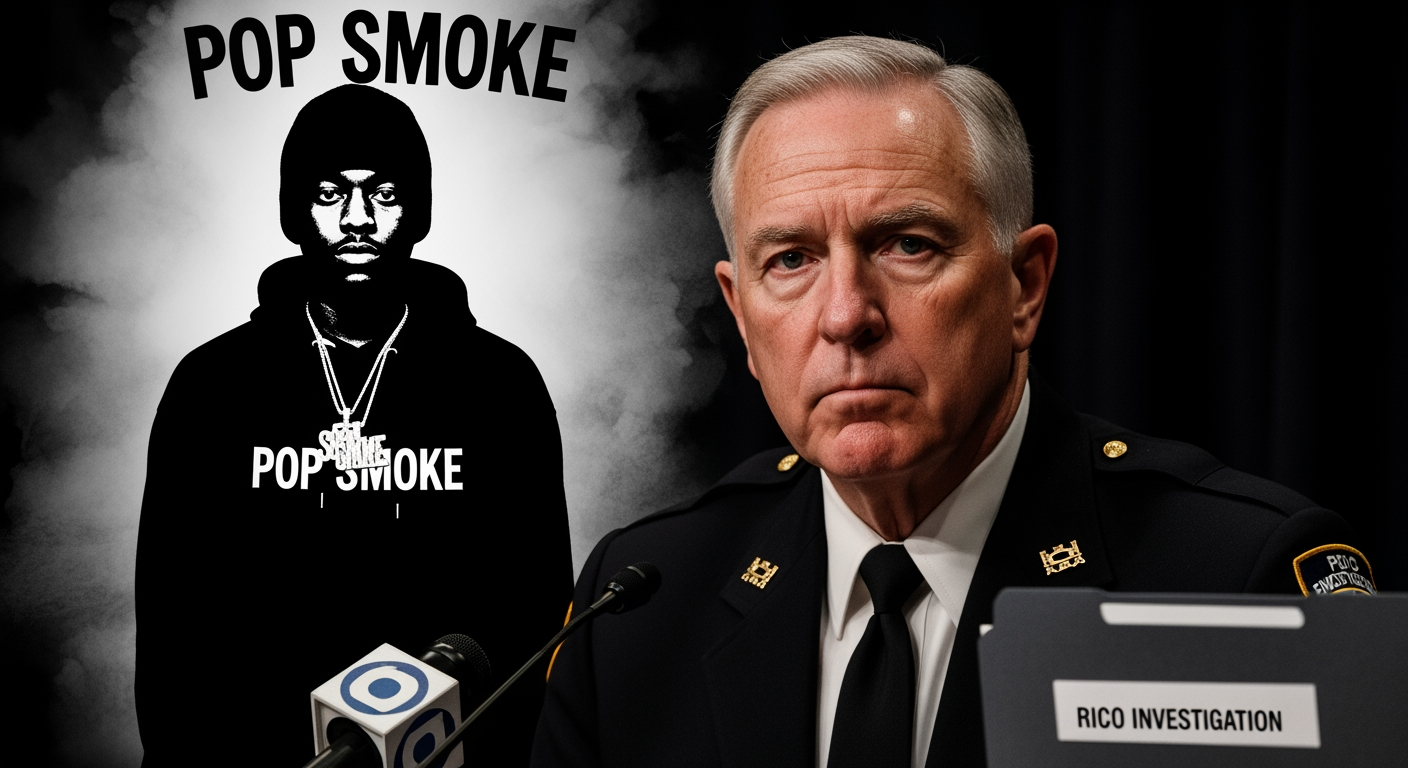
- Former NYPD Chief John Chell has revealed that a pre-murder RICO investigation specifically targeted rapper Pop Smoke.
- The probe reportedly centered on a stolen gun, connecting it to individuals within the volatile Brooklyn drill music scene.
- This revelation reshapes the narrative of Pop Smoke’s death, underscoring the complex intersection of music and alleged gang activity.
- The details prompt questions about the intense scrutiny faced by drill artists and the role of hip-hop forensics in such cases.
A pre-murder RICO investigation actively targeted rapper Pop Smoke and his associates before his 2020 death, former NYPD Chief of Patrol John Chell has revealed. This unexpected disclosure, emerging from a recent viral clip, sheds new light on the intense scrutiny faced by the Brooklyn drill pioneer.
Chell’s statements indicate the NYPD was deeply embedded in a multi-faceted probe into alleged gang activity within the burgeoning Brooklyn drill music scene.
The investigation reportedly involved tracking a specific stolen firearm, believed to be circulating among individuals associated with Pop Smoke’s orbit. This police surveillance predates the rapper’s fatal home invasion.
This revelation has profound implications for the pressures and legal entanglements shadowing drill artists. Many within the genre argue their music, often depicting street life, is unfairly criminalized and used by law enforcement as evidence. The Pop Smoke RICO investigation now stands as a stark example, highlighting the fine line artists navigate between artistic expression and legal peril.
Providing insight into the department’s investigative approach, John Chell explained:
“We had a pre-murder RICO investigation on Pop Smoke and his crew. We were tracing a stolen gun, and it led us right back to individuals very close to him. Our intelligence suggested a direct link to ongoing criminal enterprise within the drill scene.”
— John Chell, Former NYPD Chief of Patrol
This confirmation reignites debates about law enforcement’s role in monitoring musical genres deemed controversial. It also emphasizes the often-overlooked systemic challenges faced by artists from underserved communities, where the lines between street affiliations and burgeoning music careers can become dangerously blurred. The findings compel a closer look at judicial practices when handling cases involving creative industries.
Meanwhile, the viral clip featuring Chell’s remarks has profoundly shaped ongoing discussions in hip-hop forensics. Experts and fans alike are scrutinizing how police gather and utilize intelligence related to musical artists, questioning the ethical boundaries and potential for profiling within the justice system. The focus intensifies on whether such investigations inherently criminalize a cultural movement or genuinely serve public safety.
Academics and legal advocates are increasingly calling for more nuanced approaches to the complex dynamics between music, crime, and community. The Pop Smoke case, bolstered by these disclosures, now stands as a critical touchstone for those advocating reform in how law enforcement interacts with the music industry, especially genres like drill music. For more information on RICO charges, you can visit the FBI’s official page on RICO.
The ongoing conversation also touches on broader issues of systemic bias and the disproportionate targeting of Black artists and cultural movements. Understanding the full scope of a pre-existing police investigation into Pop Smoke is crucial for grasping the environment in which many young artists create. Learn more about the challenges faced by drill artists in this New York Times feature on drill music.
As these revelations circulate, many are left to ponder the implications that this information would have had if it had been public earlier. The focus shifts not only to the tragic outcome but also to the intricate web of investigations that often precede such incidents in the lives of high-profile cultural figures.
The conversation around Pop Smoke’s legacy and the scrutiny of drill music shows no signs of abating. It continues to prompt crucial dialogues about police practices and artistic freedom. Further insights into Pop Smoke’s life and legacy can be found via Rolling Stone’s coverage. The original clip sparking these discussions was widely shared on platforms like HOT 97’s X (formerly Twitter).