
Quick Read
- NBA star Mitchell Robinson’s music preference sparks a debate over cultural identity in professional sports locker rooms.
- His surprising choice of Morgan Wallen over hip-hop icon DMX ignited over 300,000 online discussions, revealing societal rifts.
- The incident prompts a critical look at how athletes’ personal tastes can spark complex conversations about race, genre, and belonging.
- This raises the question: Is the locker room a neutral space for personal preference, or does it reflect larger cultural tensions?
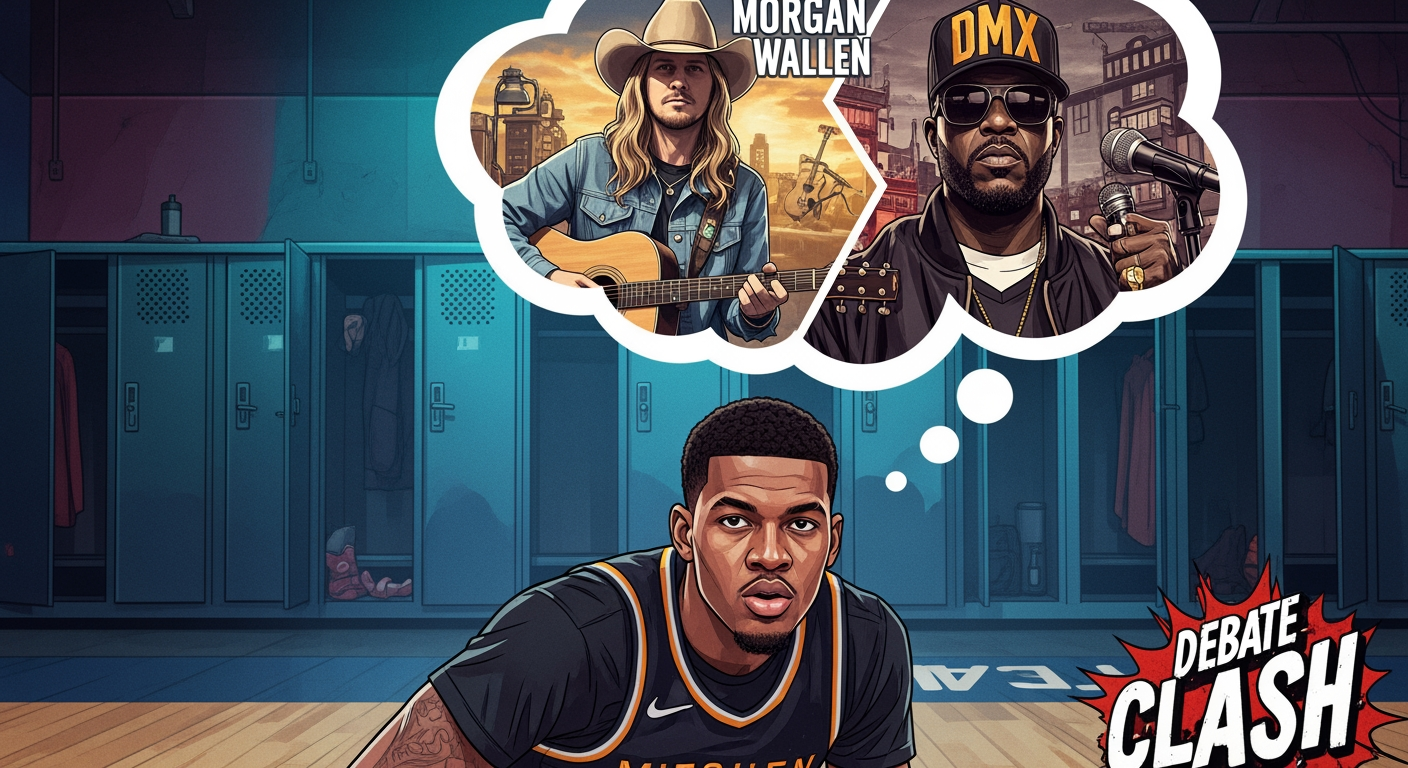
A recent preference shared by New York Knicks center Mitchell Robinson has ignited a fierce online debate. Robinson expressed a surprising choice for locker room music: country music sensation Morgan Wallen over the late hip-hop legend DMX. This comment, initially shared on social media platforms, quickly evolved into a complex discussion on music taste, cultural identity, and race within professional sports. The Robinson-Wallen-DMX debate exposes underlying tensions in sports entertainment.
Robinson’s candid remark, seemingly casual, quickly became a social media flashpoint. Fans and commentators began dissecting his choice, particularly noting Wallen’s past controversies involving racial slurs. The juxtaposition of Wallen, known for both hits and criticism, with DMX, an undisputed rap icon, proved especially impactful. This incident prompted an intense examination of the cultural choices made by public figures.
At the heart of this discussion lies a persistent cultural divide between country and hip-hop music in America. DMX’s raw, visceral lyrics and indelible presence embody a significant era of rap, resonating deeply with many, especially within Black communities. Morgan Wallen, conversely, represents a modern country sound with a massive fanbase, predominantly, though not exclusively, white. This clash of genres extends beyond sound, touching on the communities, histories, and societal perceptions each genre embodies.
The conversation quickly pivoted to race within sports, particularly in the NBA. Critics contend that Robinson’s statement, regardless of intent, minimized DMX‘s cultural significance. They argue it inadvertently aligned with a figure whose past includes racial insensitivity. This perspective highlights the unique position of Black athletes, who often navigate spaces where their cultural expressions are scrutinized. It raises profound questions about whose culture holds privilege in shared professional environments like a locker room, a theme explored in discussions concerning athletes and social justice.
Reactions from fellow athletes and sports analysts have been diverse, continuing through 2025. Some teammates defended Robinson‘s right to personal musical preference, emphasizing individual choice and the evolving nature of NBA locker room culture. Others, however, acknowledged deeper implications. They recognized how such statements might be perceived as tone-deaf in a league with a vast majority of Black players. The incident underscores how even minor preferences can become flashpoints for broader societal dialogues, revealing underlying tensions and biases.
Cultural critics emphasize understanding the historical context behind such musical preferences. DMX’s impact on hip-hop culture is undeniable, as detailed in comprehensive biographies. Meanwhile, Morgan Wallen’s chart-topping success, despite past controversies, positions him as a significant figure in contemporary country music, according to music industry profiles. Dr. Lena Khan, a sports psychologist, notes these discussions are crucial for team cohesion.
“These moments, though seemingly minor, offer crucial insights into the complex dynamics of identity and belonging within professional teams and society at large. Ignoring them means missing a key opportunity for growth and understanding.”
— Dr. Lena Khan, Sports Psychologist
This ongoing dialogue reminds us that sports are not insulated from real-world issues. Athletes, as public figures, inevitably become catalysts for conversations extending far beyond the game. The Robinson-Wallen-DMX controversy continues to resonate, challenging fans and institutions to consider the profound impact of cultural expression. It highlights the complexities of navigating personal preference in a global, diverse arena, forcing a continued examination of what true inclusion entails.