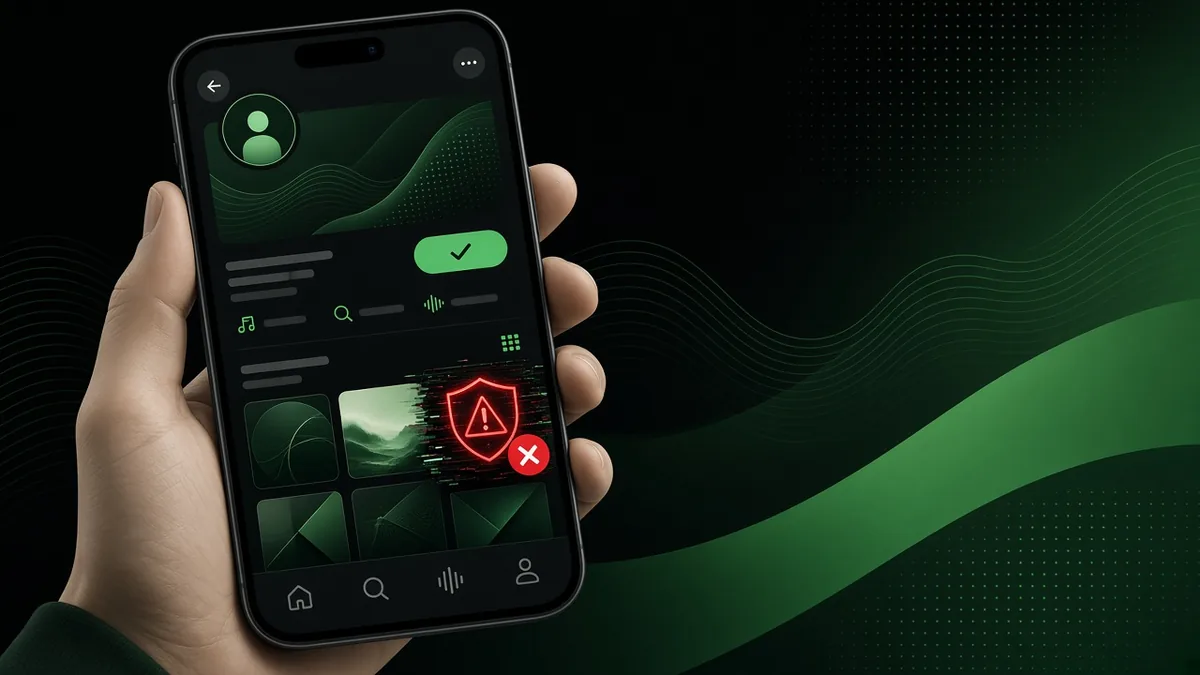
Spotify is giving every artist on its platform a way to keep other people’s music off their profile. As of November 17, Artist Profile Protection, a tool first tested in March, is available to all artists through Spotify for Artists.
The feature targets a problem that predates the AI boom but has grown with it: releases landing on the wrong artist page. Spotify blames metadata errors, artists who share a name and deliberate impersonation, and its announcement says “the rise of easy-to-produce AI tracks” has made the problem worse. A fake release can feed an artist’s stats, show up in Release Radar and reach fans who assume it is real.
“Artists should never have to find someone else’s music under their name,” Sam Duboff, Spotify for Artists’ global head of marketing and policy, said in a statement reported by Music Business Worldwide. “Their artist profile should be in their control.”
Once an artist opts in, Spotify sends an email whenever music is delivered with that artist’s name attached. According to Spotify’s help center, the artist can remove themselves from an eligible release before it appears on their profile or for up to 28 days after it goes live. A removed release won’t list them, count toward their stats or appear in recommendations to their listeners. Only admins and editors on an artist’s team can change the setting.
There is a catch in the default. Under the standard mode, which Spotify calls Review releases, a release goes live as scheduled if nobody acts on it. That reverses the beta. When Spotify first tested the tool in March, releases that an artist ignored were blocked from the profile by default, MBW reported at the time. Spotify says it spent the beta refining the tool so artists could protect their profiles “without disrupting release schedules.”
The stricter option, Block releases, holds every release until the artist approves it. Spotify is testing that mode with a limited group of artists, so most will not see it yet. Artists in that group get a unique “artist key” they can hand to trusted distributors, and releases delivered with the key arrive pre-approved. Spotify warns artists not to post the key publicly and says it can refresh a compromised key. Approvals can take up to 24 hours to process.
The help pages spell out details that matter to working musicians. Removal applies only on Spotify, so a fake release may still sit under an artist’s name on other services, and Spotify suggests artists alert their label or distributor. A featured artist or remixer who doesn’t approve a release can still see it go live without their name. Artists moving their catalog between distributors may not have to re-approve anything, because Spotify automatically passes releases whose tracks match music already on the profile.
Spotify says thousands of artists tested the feature, including Diplo, the Harlem rapper Dave East, the singer-songwriter Samia, Searows and the duo The Army, The Navy. “The connection Samia’s fans have to her music is special,” said Robbie Mackey of her label, Grand Jury Music. “We’re glad Spotify is giving us more control over what appears under her name.”
The rollout follows a string of identity tools from the company. Spotify introduced an impersonation policy in September 2025 and launched a Verified by Spotify badge in April 2026, which more than 300,000 artists had received as of October 20, according to the company. In the same October update, Spotify said it had removed more than 50 million “slop and spam” tracks from its recommendations so far this year.
The pressure is coming from the labels as well. By the end of September 2026, Sony Music had sought the removal of more than 260,000 AI-generated tracks impersonating its artists from digital platforms, nearly double the 135,000 it reported at the end of March, according to the Financial Times, as cited by MBW. “We will keep enforcing our artists’ rights and expect platforms to act quickly and to prevent the same content from reappearing,” Sony told the paper. “But it’s becoming an uphill struggle.”
Spotify calls itself the first and only streaming service with a tool like this. It arrives as rights holders, including Eminem’s publisher and Elvis Presley’s estate, press lawsuits against AI music generator Suno over outputs that allegedly copy famous songs and voices.