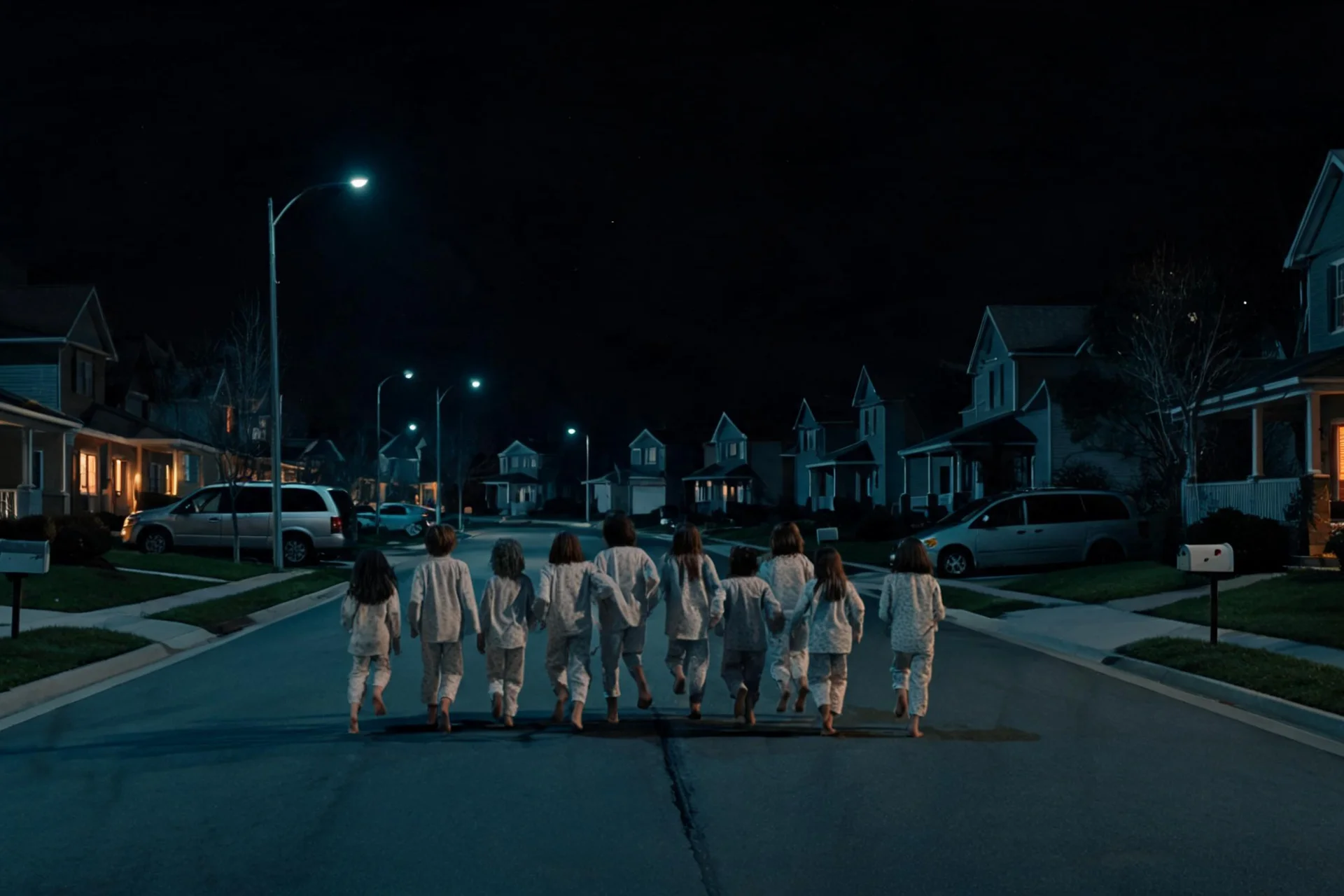
At 2:17 a.m., seventeen children climb out of their beds, walk down the stairs, open the front doors, cross the lawns, and run into the dark. They never come back. The only child left in the classroom is a boy named Alex.
That is the premise of “Weapons,” the horror film Zach Cregger made for New Line Cinema and Warner Bros., released on August 8, 2025. The first thing audiences hear, before the mystery even starts, is a little girl’s voice: “This is a true story. It happened right here in my town two years ago.”
It worked. More than a year later, people still arrive at this movie convinced a real Pennsylvania town lost seventeen of its children in a single night. The question outlived opening weekend and kept circulating well into 2026. So we did the checking ourselves. Here is the verdict, with the receipts.
The Verdict: The Film Is Fiction. The Filmmaker Never Claimed Otherwise.
“Weapons” is not based on a true story. No town has ever lost seventeen students from one classroom in one night, and no police file in the United States matches the events of the film. People magazine’s fact check, published on opening day, put it plainly: “No, ‘Weapons’ is not based on a true story. The film’s unsettling disappearances, witchcraft and other supernatural aspects were imagined by Cregger.”
The director has explained the “true story” line on the record, more than once. He told GQ in July 2025: “I literally started with the sentence, ‘This is a true story.’ I thought it would be cool to start a movie where a little girl was telling a campfire story. I didn’t even know what story she’s going to tell.”
So the most convincing sentence in the movie was the first sentence he wrote. Calling the whole thing pure invention would still miss something, though. That part deserves its own section.
The Real Story Behind the Fake One: Grief, and a Friend Named Trevor Moore
What happened to Zach Cregger in 2021 was real, and it was terrible. Trevor Moore, his longtime friend and co-founder of the comedy group The Whitest Kids U’ Know, died suddenly that August at 41. Cregger wrote “Weapons” the way grieving people often write. Compulsively. To survive something.
He described it to Entertainment Weekly in April 2025: “I had a tragedy in my life that was really, really tough. Someone very, very, very close to me died suddenly and, honestly, I was so grief-stricken that I just started writing ‘Weapons,’ not out of any ambition, but just as a way to reckon with my own emotions.”
Rolling Stone confirmed the friend was Moore and reported that Cregger dealt with the loss in “a blitz of writing,” a run that began with that now-famous first line. On Deadline’s Crew Call podcast in November 2025, he went further: “‘Weapons’ is autobiographical in a lot of ways.” On The Next Best Picture podcast the previous July, he translated it into the film’s own terms: “You know, someone really close to me died. I was able to write these characters that had the same emotions, you know? About these kids leaving and this community left in the wake of that.”
Which is the key to the whole picture. Seventeen children vanish, and the film spends its running time on the people left standing in the driveway at 2:18 a.m. That part, Cregger lived himself.
What the Movie Is Actually About (Plot, Minus the Marketing Fog)
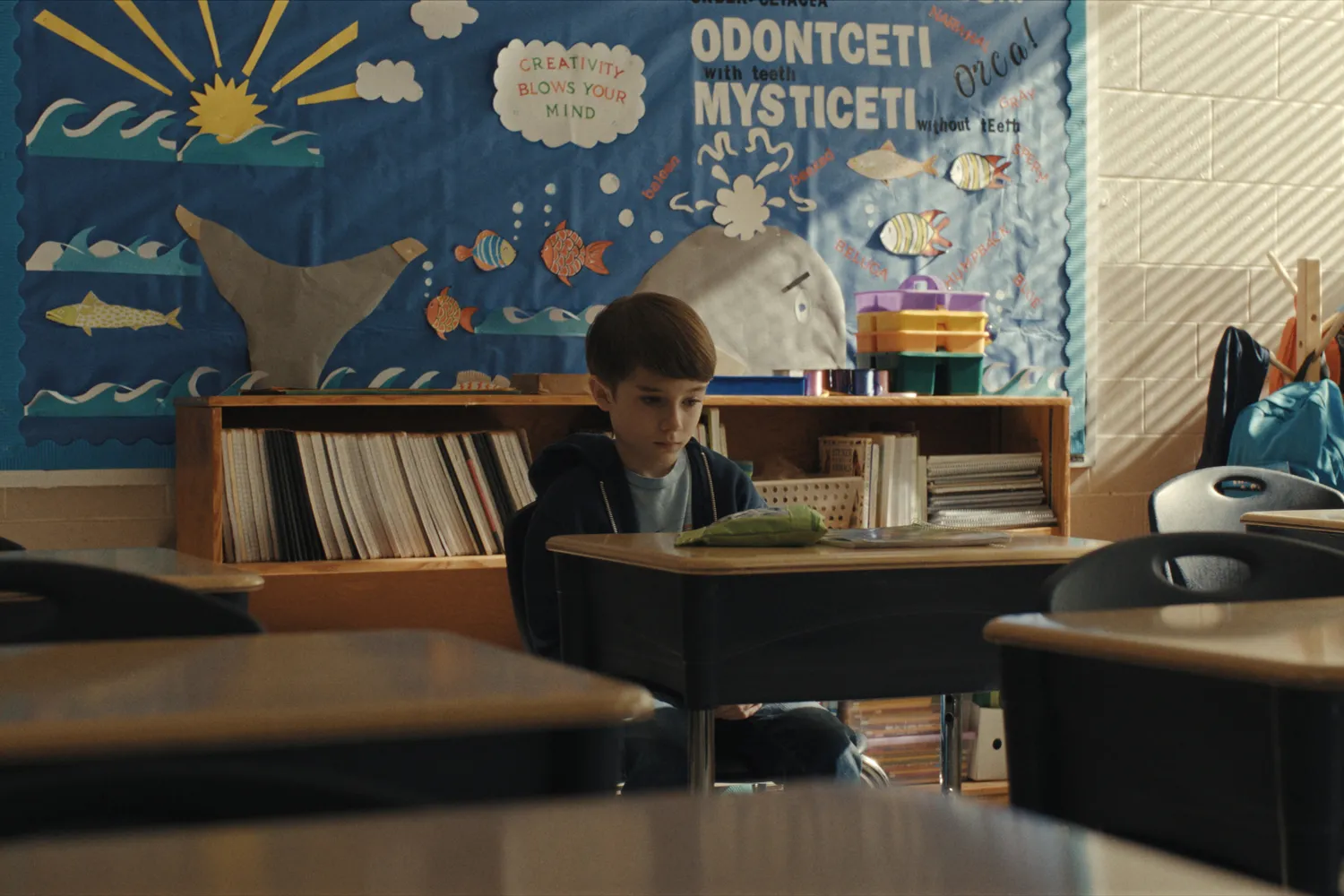
The setting is Maybrook, a fictional mid-Atlantic suburb. One Wednesday night at exactly 2:17 a.m., every child in third-grade teacher Justine Gandy’s class except Alex Lilly (Cary Christopher) runs out of their homes and disappears. The community needs someone to blame, and it picks the teacher.
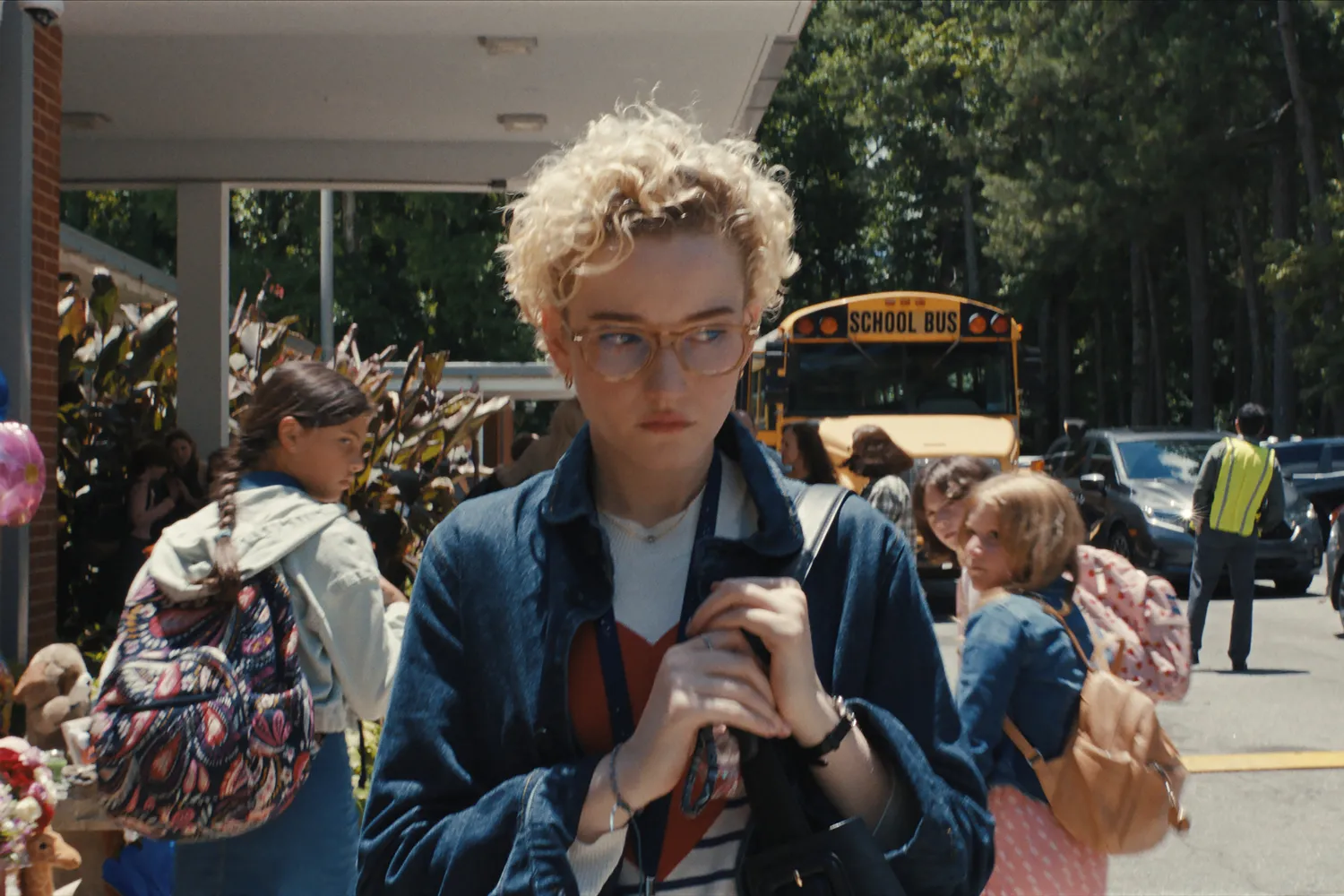
Justine, played by Julia Garner, gets suspended, harassed, and slowly hollowed out. Archer Graff, played by Josh Brolin, is the father of one of the missing children, and he refuses to accept the stalled police work. He cross-references doorbell camera footage and finds what the investigators missed: the children’s running paths all converge on a single point.
The story then braids in the rest of the town. A conflicted cop with a drinking problem and a past with Justine (Alden Ehrenreich). A burglar hunting a reward (Austin Abrams). And Alex’s house itself, windows papered over with newspaper, his parents sitting motionless in the dark.
The answer is a witch. Gladys, played by Amy Madigan in the performance that owned the film’s awards season, is Alex’s reclusive great-aunt, an ancient parasite who weaponizes the children and bends the town’s adults to her will. The final act burns the secret down in a violent, operatic finale that had audiences cheering in theaters.
Fair warning, and it comes from the film’s own narration: the children who came back “were never the same.” The ending is a rescue. The movie refuses to call it a happy one.
Movie vs. Reality: A Claim-by-Claim Breakdown
Here is where the film parts ways with the record. Five claims, five answers.
The claim: a town called Maybrook, Pennsylvania exists. Maybrook is fictional. Cregger confirmed the point to Entertainment Weekly, and the film’s production materials treat it as invented. There is a real Maybrook in New York, a small hamlet in Orange County, and its history contains no mass disappearance.
The claim: seventeen children from one class really vanished at 2:17 a.m. No such case exists in any law enforcement database, news archive, or missing-persons registry. Cregger told EW that his first idea was darker still, an entire classroom dead by suicide, and that he pulled the plug on it himself. “I don’t wanna watch that movie, I don’t wanna make that movie, but I was writing that movie,” he said. “That was the one self-edit that I did.” Then he pivoted to a disappearance.
The claim: the children were found, which is why nobody ever heard about it. That line belongs to the narrator, and it is the film’s slyest move: a story that explains its own absence from the news. It is fiction doing what fiction does best.
The claim: the events were based on a real case. Cregger has never cited a real case as source material. He has cited his own grief, the structure of Paul Thomas Anderson’s “Magnolia” (he wanted “the John C. Reilly cop” from that movie, which became Alden Ehrenreich’s Paul), and the atmosphere of Denis Villeneuve’s “Prisoners,” the 2013 thriller about abducted children in Pennsylvania. Cregger even scouted the same Atlanta area where “Prisoners” shot, after learning his first choice of location was already taken. One more documented detail: he told EW the children’s sprinting pose was subconsciously lifted from the “Napalm Girl” photograph from Vietnam.
The claim: Warner Bros. marketed it as real. The studio leaned into the ambiguity. As part of the campaign it launched MaybrookMissing.com, a fake local-news site with fabricated articles about the missing Maybrook children. That is marketing commitment bordering on an alternate reality game, and it is the single biggest reason the “is it real?” question spread.
The Real Cases People Keep Bringing Up, and Why They Matter
No, the film is not based on them. The premise feels believable anyway because history keeps producing genuine nightmares that rhyme with it. Three are worth knowing.
The Sodder children, Fayetteville, West Virginia, 1945. A Christmas Eve fire destroyed the Sodder family home, and five of the ten Sodder children, ages 5 to 14, were never found. Not in the ruins. Not anywhere. The parents spent the rest of their lives insisting the children had been taken, and the case was never solved. Like “Weapons,” it is the story of a town where the official answer satisfied no one.
The Beaumont children, Adelaide, Australia, 1966. Jane, Arnna, and Grant Beaumont, ages 9, 7, and 4, went to a beach on Australia Day and never came home. Three children, one morning, an entire country’s lost innocence, and no answers in nearly sixty years.
The Chowchilla school bus kidnapping, California, 1976. The closest real-world echo of the film’s core image. A masked gunman stopped a school bus and took the driver and all 26 children aboard, then buried them alive in a quarry trailer, the largest mass child abduction in U.S. history. Those kids dug their way out and survived. The movie’s children did not get that ending.
Cregger copied none of them. He built a fiction on ground that real tragedies had already scarred, which is exactly why it lands.
Why the Frame Sold: The Box Office and Awards Receipts
The “true story” framing unsettled audiences, and it filled seats. The film opened to $43.5 million domestic, one of the biggest R-rated horror debuts on record, then legged it out to $151.5 million at home and $270 million worldwide, per Box Office Mojo and The Numbers. Production cost $38 million. That is roughly a seven-to-one return on an original idea with no franchise behind it.
One correction worth making, because aggregator cards keep getting it wrong: the $270 million figure is the worldwide gross, not the budget. Several sites list it as the budget. It is not.
The acclaim matched the money. Rotten Tomatoes has the film at 93 percent, Metacritic at 81, IMDb at 7.4. Amy Madigan’s Gladys won the Academy Award for Best Supporting Actress and the SAG Award, and a prequel centered on the character, “Gladys,” is scheduled for 2028.
Buzzwire Daily’s Point of View
Our editorial position, stated plainly. Cregger never lied. A director inventing a “true story” opening for a horror film goes back at least to “The Texas Chain Saw Massacre” in 1974, which wore the same frame and was equally untrue. What deserves scrutiny is us.
Millions of viewers accepted a supernatural plot about an immortal witch because the packaging said “true,” then went looking for a real Maybrook. Meanwhile the genuinely true story, a 40-year-old man suffocating in grief after his best friend’s sudden death, sat in every interview, mostly unread. The fake story traveled faster. It usually does.
There is a media lesson here that outlives the movie. Warner Bros. built a fake news site and audiences treated it as a source. In 2026, a convincing fictional frame travels faster than its correction. The checking habit, the one you exercised by reading this far, is what stands between you and the next Maybrook.
“Weapons” is a true feeling dressed as a case file. The costume explains the gross. As for the grief underneath, it is the reason a Gladys prequel already has a 2028 date on the calendar.
Sources and Evidence
- Entertainment Weekly, “Watch the ‘Weapons’ opening scene,” July 30, 2025 (opening narration, Maybrook’s fictional status, the abandoned suicide draft, “Magnolia” and “Prisoners” influences, the “Napalm Girl” detail): EW
- People, “Is ‘Weapons’ Based on a True Story? All About the Real Inspiration Behind the Haunting Horror Film,” August 8, 2025 (verdict, GQ quote, grief quotes, MaybrookMissing.com): People
- Rolling Stone, “How Zach Cregger Turned Tragedy Into the Terrifying ‘Weapons’,” August 10, 2025 (Trevor Moore identification): Rolling Stone
- Deadline, “Zach Cregger On How ‘Weapons’ Is ‘Autobiographical’,” November 20, 2025: Deadline
- Variety, “Box Office: ‘Weapons’ Impresses With $42.5 Million Debut,” August 10, 2025: Variety
- The Numbers, “Weapons (2025)” box office and financial data: The Numbers
- Box Office Mojo, “Weapons (2025)” ($270,072,492 worldwide): Box Office Mojo
- Bloody Disgusting, “Making Horror Personal: Zach Cregger on the Underlying Grief of ‘Weapons’,” October 14, 2025: Bloody Disgusting
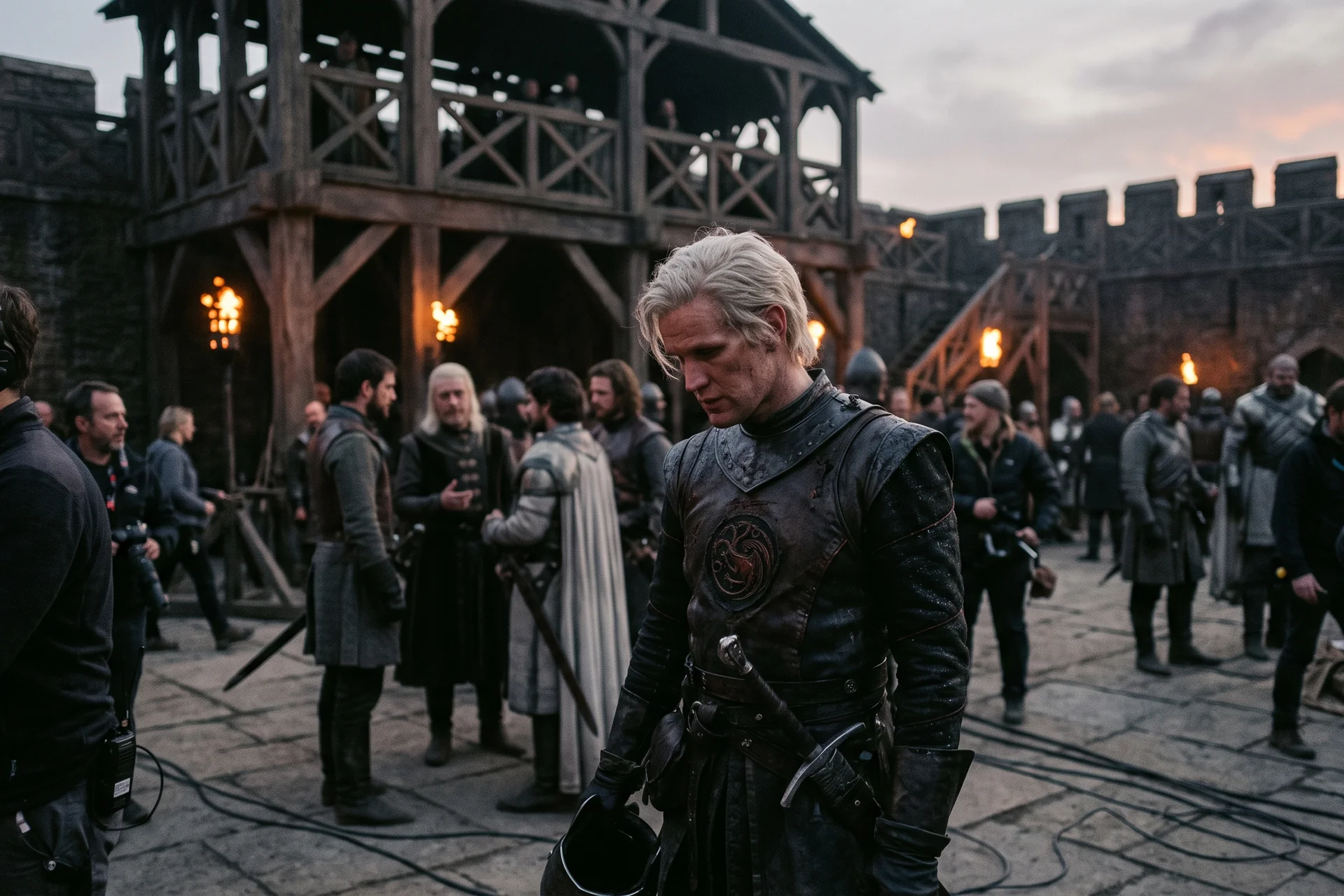
Image credits: the production stills in this article are courtesy of Warner Bros. Pictures, from “Weapons” (2025), a New Line Cinema / Warner Bros. Pictures release, reproduced for editorial commentary and review. The lead image is an original illustration created for this report.
Spotted an error? The Buzzwire Daily desk re-reports every claim a reader challenges, and we have corrected this one before.